
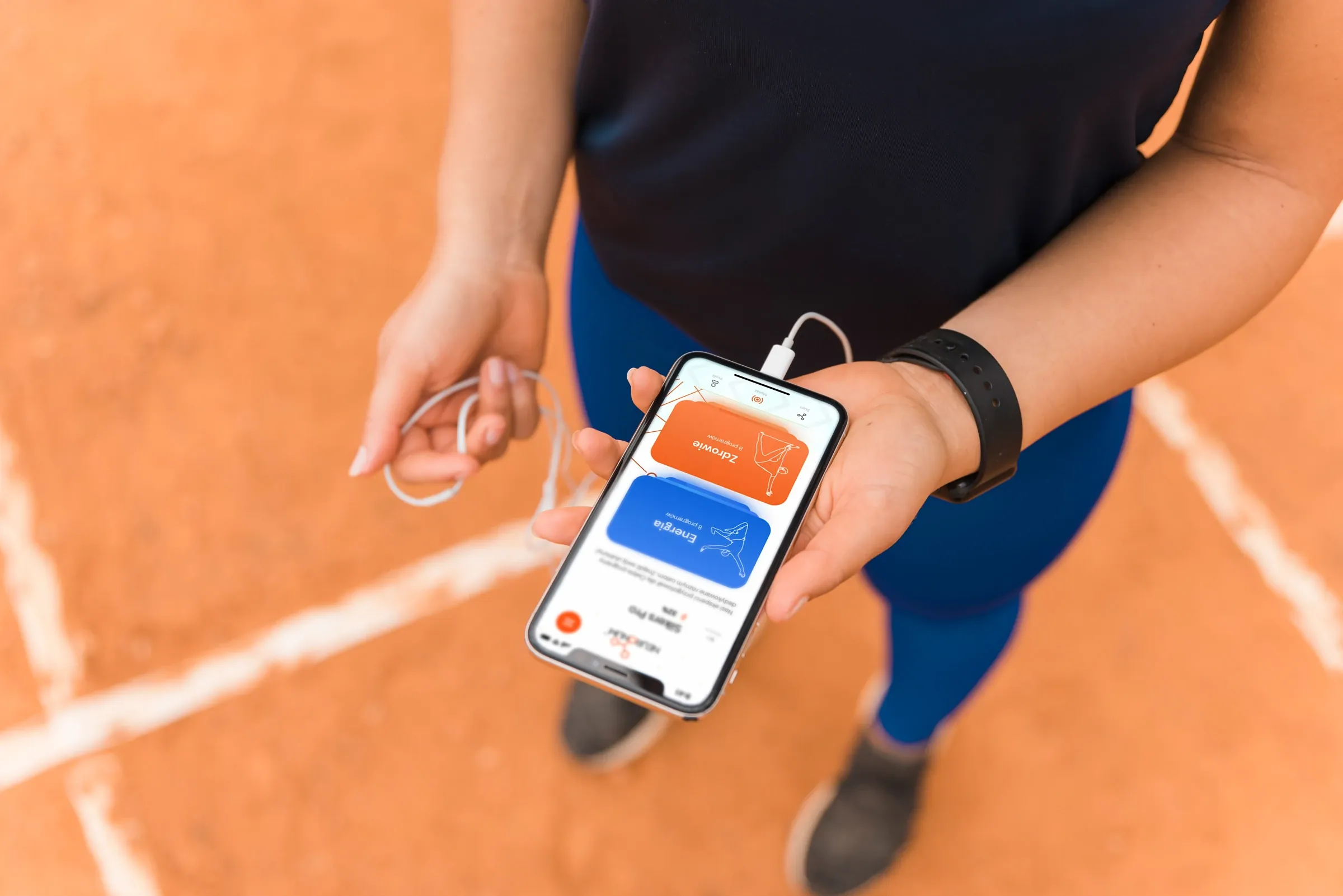
Design of a mobile app paired with a device over BLE
NEURONUM – a personal massager
Neuronum is a mobile app that works with the client’s product – lightweight indoor footwear fitted with a multi-zone micro-vibration system. Several dozen vibration motors built into the sole run in varying sequences, intensities and rhythms, producing personalised massage programmes from relaxing ones through to those supporting recovery and health. Our job was to design and build an app that lets the wearer manage the footwear intuitively, plus an admin panel for the client to manage programmes, devices and user feedback.
Stage 1
Preparation
-

Design documentation
-

New branding
-

Technical consulting
Documentation and UX research
We began with technical consultations and UX testing on real hardware. We ran a series of research sessions with prototype footwear, examining how it gets used in different conditions. We watched how people responded to different massage intensities, session lengths and vibration zone layouts. We paid attention not only to preferences but also to purely physical constraints – Bluetooth signal reliability, how quickly the device responds, and how the sensation differs depending on body type and circumstances of use.
Technical configuration and personalisation
Working closely with the hardware engineer also proved essential – the person responsible for the electronics driving the motors and for developing the health programmes. We went through vibration frequencies, pulse cycles, which technical parameters could be modified, and where the device might go next. That information became the basis for a flexible, scalable app architecture built to accommodate new features later on.
Stage 2
Design
-

UX research
-

Mobile app and website design
-

Clickable prototype
Interface design against platform standards
The interface was built on current mobile design standards, both in terms of user experience and of visual clarity. We followed Apple’s Human Interface Guidelines and Material Design 3, so the app fits the habits users already have and stays visually consistent with the operating system around it.
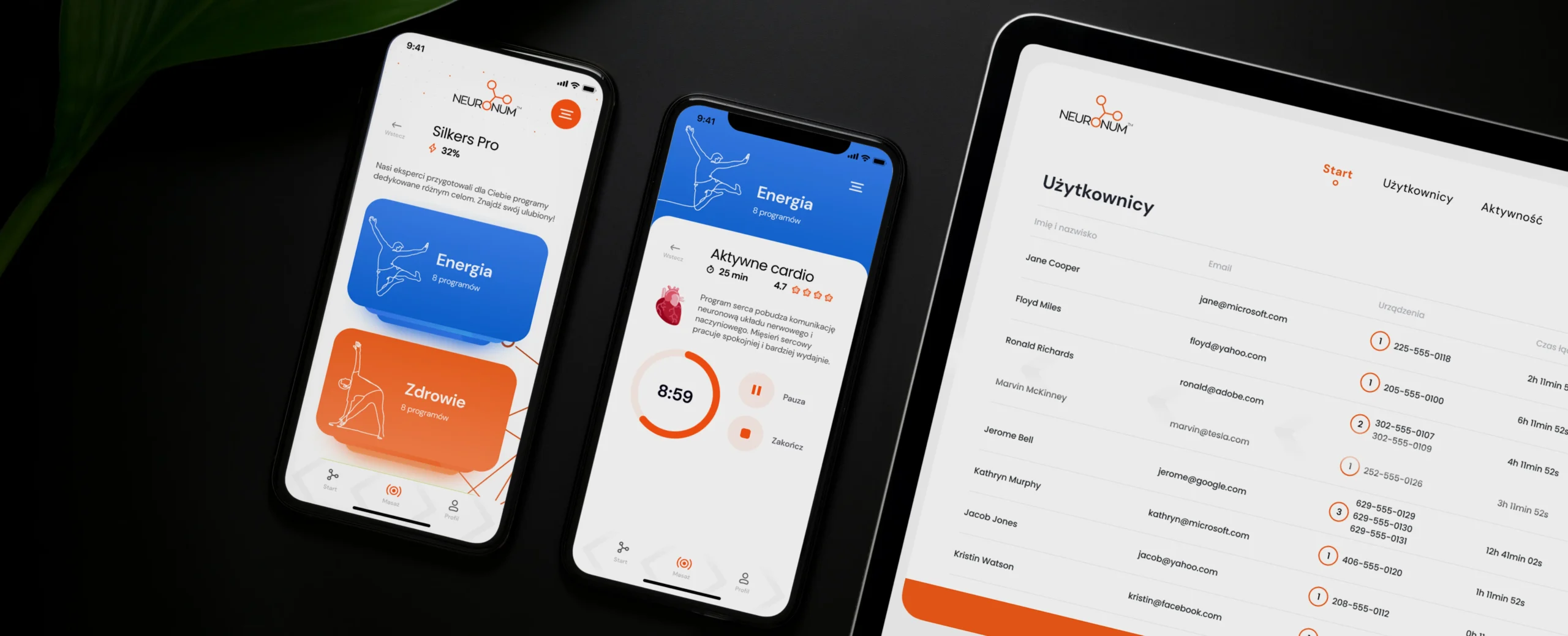
Beyond the mobile app we designed an admin panel for the client, with a dashboard pulling together information from the various modules so the essentials are visible at a glance and the team can react to support tickets or feedback on particular massage programmes.
UI/UX practices we applied
We applied progressive disclosure – revealing options gradually rather than overloading the interface. The programme selection screens follow the one primary action per screen principle, which aids comprehension and reduces the risk of mistakes.
The project also leans on UX microcopy – short, supportive messages at every interaction, which build trust and take the edge off uncertainty. The whole thing was built on a component library rather than a full design system, because the number of modules and UI states was not large enough for a heavier system to pay for itself.
Stage 3
Implementation
-

Extended responsiveness
-

Bluetooth communication
-

Modern integrations
How the app talks to the device
Building the app was demanding above all because of the Bluetooth integration with a physical device, the data synchronisation and the personalisation it had to support. Working closely with the client’s technical team, we arrived at a communication model between the app and the footwear controller that gives stable, smooth control over the motors and reads device status in real time. We built a middleware layer that let us test commands with the device disconnected or idle, which sped up testing and debugging considerably. The app also carries a firmware update mechanism, so the client can develop the product without touching the hardware physically.
What the app can do
We built a substantial user account module where you can pair a specific device to yourself, assemble sets of favourite massage programmes and set session schedules for particular days and times. All data is stored locally and synced to the cloud, so a profile can be restored on another device.
On the client’s side we prepared a separate management panel for adding new programmes, monitoring device activity, reviewing user feedback and handling support tickets. That gave the product not just an attractive mobile app but a full back end for running the service and talking to its users.
In summary
Neuronum is an interdisciplinary project that brings a modern approach to mobile design together with a physical consumer product. Thanks to user testing on real hardware, consultations with the hardware engineer and a grounding in good UX/UI practice, we ended up with an app that genuinely supports recovery, relaxation and health. Integration with the smart vibrating footwear, personalised massage programmes, schedules, operating modes and easy Bluetooth control add up to an unusual user experience – one built on comfort as much as on function.
It was also a technical challenge, and one that shows how to connect a physical experience with the digital world thoughtfully and with people in mind. It is a good example of how mobile app design can support innovative medical and wellness products.